Low Temperature Enzyme for Cold Water Detergent
For detergent makers moving laundry lines to cold washes: choose, trial and buy a cold-active enzyme system. Compare activity, pH, dosage, QC, COA/TDS/SDS and cost-in-use.
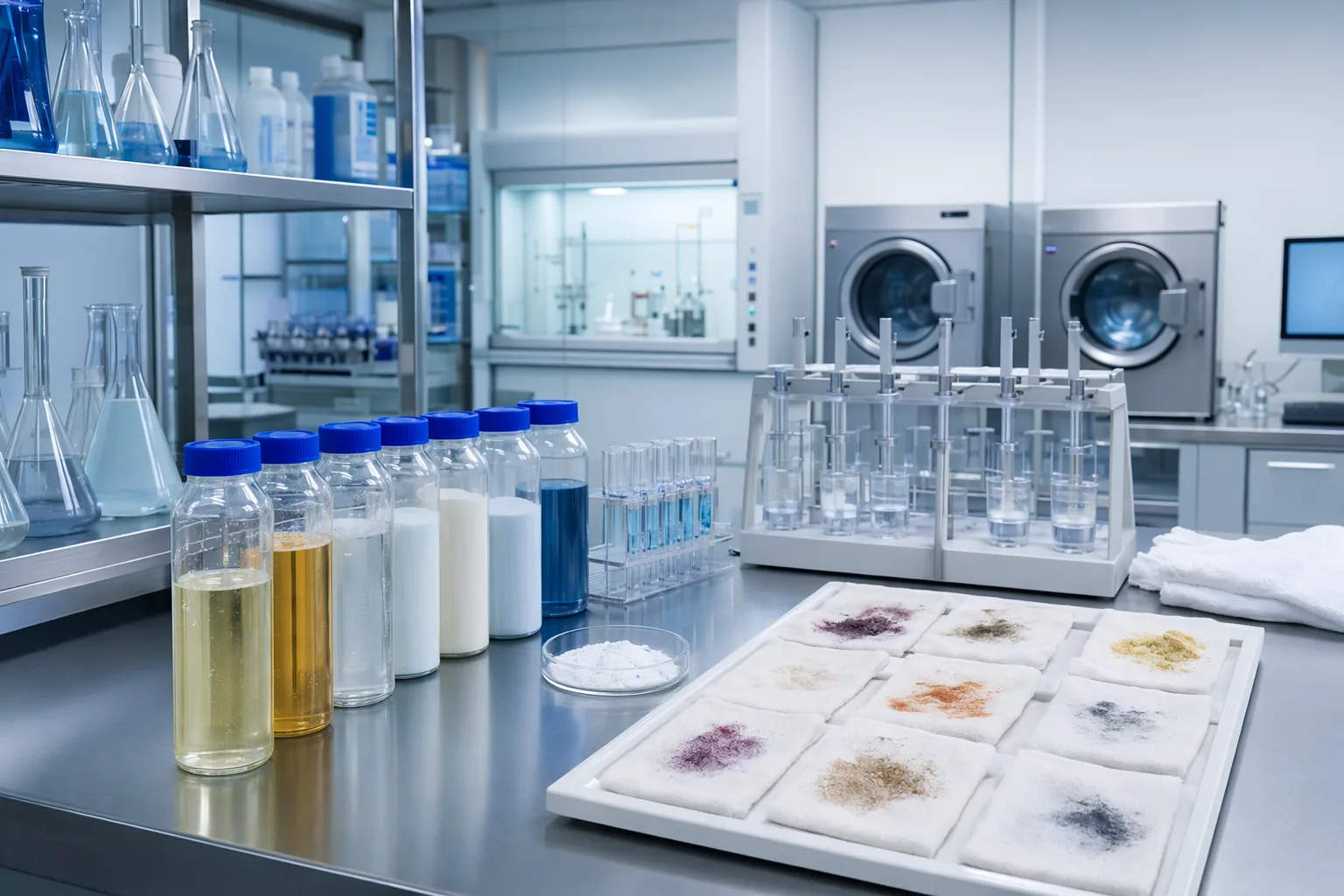
Cold-water laundry puts the burden of cleaning on the enzyme system: when the wash is not heated, protein, starch and fat soils need enzymes that still work in cool wash liquor. This guide is for detergent manufacturers, private-label brands and distributors choosing a cold-active enzyme system: what to compare, how to trial it in your own base, and what to send for a quote.
FastEnzyme supplies a cold-active protease, lipase and amylase system with optimal activity at pH 8.0–11.0 and 15°C–60°C, as light brown granules or powder in 25 kg fiber drums or custom packaging.
What a Cold-Active Enzyme System Has to Do in Cold-Water Laundry
A low temperature enzyme for cold water detergent is chosen for one job: useful catalytic activity in a cool, alkaline wash where conventional detergent enzymes slow down. For a detergent maker, the target is not a high number in a lab assay; it is reliable cleaning in your powder, liquid, pod or sheet format under your customers' wash conditions. Proteases remove protein soils such as blood, egg and grass. Amylases target starch-based residues. Lipases support fatty soil removal. Each enzyme must be matched to detergent pH, builders, surfactants, oxidants, chelants, preservatives and your processing conditions.
Product data: protease, lipase and amylase • Activity 50,000–100,000 U/g • Optimal pH 8.0–11.0 • Optimal temperature 15°C–60°C • Light brown granules or powder • 25 kg fiber drums / custom packaging • MOQ 25 kg • Shelf life 12 months sealed, cool and dry
How to Choose the Right Enzyme Type
Choose by the cleaning promise of the product and by the detergent matrix. Protease is usually the first enzyme for broad stain removal, but cold-wash detergents commonly use a multi-enzyme system. Amylase improves removal of cereal, sauce and starch residues at low temperature. Lipase matters where sebum, oils and fat-containing soils are important. Ask for side-by-side results under your own wash profile rather than relying on generic assay activity: water hardness, wash time, fabric type, soil set, detergent dose and rinse conditions all change the result.
Protease: protein stains • Amylase: starch stains • Lipase: fats and oils
Process Conditions and Formulation Compatibility
Cold-active enzymes must survive manufacturing, storage and use. In liquid detergents, compatibility with surfactants, solvents, preservatives, water activity, calcium level and pH is critical. In powders, moisture, alkalinity, percarbonate, bleach activators and mechanical handling can reduce activity if the enzyme format is not suitable. Screen the enzyme in your full detergent, at the wash temperatures your customers use and within the product's stated window of pH 8.0–11.0 and 15°C–60°C, before narrowing the dose by stain removal and cost-in-use. Avoid heat, strong oxidants or extreme pH during enzyme addition unless the product has documented tolerance, and follow the TDS for addition point, mixing and storage.
Add enzymes after high-heat processing where possible • Check compatibility with bleach and oxidizing systems • Run accelerated and real-time stability studies • Confirm residual activity in the final detergent
Quality Control Documents Buyers Should Request
A reliable low temperature enzyme supplier for cold water detergent should provide documentation that supports technical evaluation, safe handling, and purchasing control. The Certificate of Analysis should identify batch-specific activity, appearance, moisture or relevant physical attributes, and release criteria. The Technical Data Sheet should describe recommended application range, pH and temperature guidance, storage conditions, dosage suggestions, and formulation notes. The Safety Data Sheet should address industrial handling, respiratory sensitization precautions, personal protective equipment, spill response, and transport information where applicable. Buyers should also request allergen and microbial control information when relevant to their internal requirements. Documentation should be aligned with the supplied product grade and format. Do not qualify a supplier based only on price or enzyme name; verify batch consistency, analytical method, retained sample policy, and change notification process.
COA: batch release data • TDS: application and dosage guidance • SDS: handling and safety information • Stability data: storage and shelf-life support
Pilot Validation Before Commercial Scale-Up
Pilot validation reduces the risk of a weak product in the market. Start with benchtop compatibility screening, then move to controlled wash trials with representative fabrics, standardized stains, local water hardness and your target wash temperature. Measure cleaning against an enzyme-free control and against the current formula. Useful checks include initial activity, residual activity after storage, pH drift, viscosity change for liquids, granule integrity for powders, odor and appearance. Test after accelerated aging and after realistic warehouse storage, and check the addition sequence and mixing time, because heat, shear or concentrated chemicals can cut final performance. FastEnzyme can support buyers with sample selection, trial dosage planning, and data review so procurement teams can make decisions based on validated cost and cleaning results.
Compare enzyme-treated and enzyme-free controls • Test after storage, not only at day zero • Use local water hardness and target wash temperature • Document stain removal and physical stability
Cost-in-Use and Supplier Qualification
The lowest price per kilogram is not always the lowest cost-in-use. A concentrated enzyme with better cold activity, stronger detergent compatibility or better storage stability may need a lower dose and reduce reformulation risk. Cost-in-use should include enzyme dose per tonne of detergent, activity retained through shelf life, cleaning per wash, losses from instability and any process changes. When qualifying an industrial low temperature enzyme cold water detergent supplier, evaluate technical support, documentation responsiveness, batch consistency, lead time, sample availability, packaging options, and change control. Buyers should also confirm whether the product format fits their plant environment, dosing equipment, and worker exposure controls.
Compare cost per finished detergent dose • Include retained activity after storage • Assess packaging suitability • Require transparent change notification
To request a quote, send the product, the quantity in kg, the destination country and your detergent format. Prices are quoted per order.
Technical Buying Checklist
Use this list when you shortlist a cold-active enzyme system and when you send an inquiry.
Detergent format (powder, liquid, pod or sheet) and the wash temperatures you claim • Target stains and soil set • Formula pH and bleach or oxidant content • Activity, pH and temperature window on the TDS against your conditions • COA, TDS and SDS for the exact grade and format • Retained activity after storage in your own base • Packaging (25 kg fiber drums or custom) and MOQ (25 kg) against your batch size • Quantity in kg and destination country for the quote
Cold-Active Detergent Enzymes for Research & Industry
Need Cold-Active Detergent Enzymes for your lab or production process?
ISO 9001 certified · Food-grade & research-grade · Ships to 80+ countries
Frequently Asked Questions
What is a low temperature enzyme for cold water detergent?
It is a detergent enzyme selected to provide useful catalytic activity at cold wash temperatures, where conventional enzymes slow down; this product's optimal window is 15°C–60°C at pH 8.0–11.0. These enzymes help break down stains that would otherwise be harder to remove without warm water. In detergent formulation, the enzyme must be validated in the finished product, because pH, surfactants, builders, storage conditions, and water hardness all affect final cleaning performance.
Which enzyme is best for cold water detergent?
There is no single best enzyme for every detergent. Protease is commonly used for protein stains, amylase for starch soils, lipase for fats and oils, and cellulase for certain fabric care or soil-release benefits. Many commercial cold wash formulas use a multi-enzyme system. The best choice should be confirmed through pilot wash trials using your detergent base, target stains, and intended wash temperature.
What dosage should we use in an industrial cold wash detergent?
Dosage depends on enzyme concentration, activity method, detergent format, stain target, and shelf-life requirement. Buyers should start with the supplier’s recommended screening range, then optimize through controlled wash performance and stability testing. Final dosage should be selected by cost-in-use, not only by activity units. Always confirm retained activity after storage in the finished detergent before commercial launch.
What documents should a cold active enzyme supplier provide?
A qualified supplier should provide a batch COA, product TDS, and SDS. The COA supports release testing, the TDS gives application and storage guidance, and the SDS supports safe industrial handling. Depending on your internal requirements, you may also request stability data, analytical method information, packaging details, sample retention policy, and change notification procedures before approving the supplier.
How do we validate cold-active enzyme performance before buying in bulk?
Begin with lab compatibility tests in your detergent matrix, then run pilot laundry trials at the cold wash temperatures you plan to claim. Use representative stains, fabrics, wash time, water hardness, and detergent dose. Compare against enzyme-free and current-product controls. Also test aged samples to confirm shelf-life performance, because day-zero cleaning results do not always predict commercial stability.
Related: Low-Temperature Cleaning with a Cold-Active Enzyme System
Turn This Guide Into a Supplier Brief Request FastEnzyme samples, COA/TDS/SDS, and pilot guidance for your cold water detergent formulation. See our application page for Cold-Active Detergent Enzymes for Low-Temperature Cleaning at /applications/cold-temperature-enzyme-activity/ for specs, MOQ, and a free 50 g sample.
Contact Us to Contributehello@mail.fastenzyme.com